Welcome
The Community of French Town Web Site
Learn how a group of people came together over seventy years ago to build the second black church in Houston, Texas and the only one built by a Creole neighborhood from reading the non-fiction short story, The Community of French Town Builds A Church, by Denise Labrie posted below. 
Fulfilling A Dream
(Kerlegon-Breaux-Norman Family Web Site click here)
Sammy's Story:  A Funeral Memorial
(click here)
Tribute to Henriette Delille and Saint Bakhita (Click here)
The Louisiana to Houston Conection (Prejean-Sonnier-LeBlanc Family Web Site click here)
This church built by the Creoles of Frenchtown has served the community through out the years on both a spiritual and social level.

The original members and their descendant's sacrifice and commitment continue to be a source of inspiration to the dreams and visions that live inside each one of us.
Denise Labrie Poetry (click here)
email me
Add this page to your favorites.
This page was last updated on: February 10, 2008
email me
Thank you for visiting this web site.
Sign InView Entries
Please sign the guest book to share your own fond memories of French Town or your thoughts about the non-fiction short story, The Community of French Town Builds A Church, posted above. You may also send an e-mail to me if you prefer.
The Community of French Town Builds A Church
By Denise Calegon Labrie (as told to her by Inez Prejean Calegon and Mable Prejean Guillory)

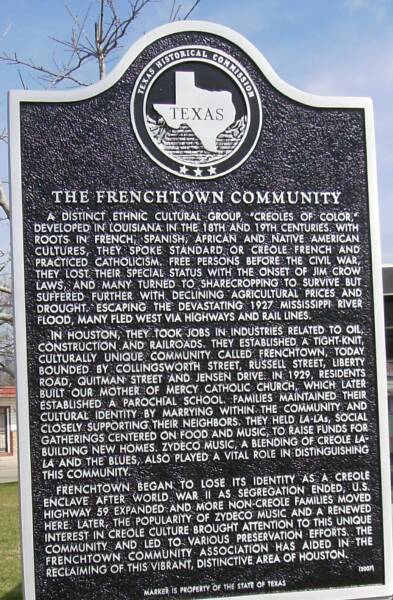
After the Great Mississippi Flood in 1927, many Creoles who were left homeless and devastated in Louisiana relocated to Houston, Texas, They settled in an area bounded by Collingsworth, Russell, Liberty Road and Jensen Drive. Because the Creole people spoke Creole French and celebrated their Louisiana food, music and culture together in this community, it became known as "French Town". The nearest black church, St. Nicholas, was located three (3) miles away. Streetcar was the only mode of transportation to get to St. Nicholas. One of the nearest churches within walking distance was a Mexican Church, Our Lady of  Guadalupe, on Navigation. The Creole people were only allowed to sit on the back row and receive communion and attend confession after everyone else did.

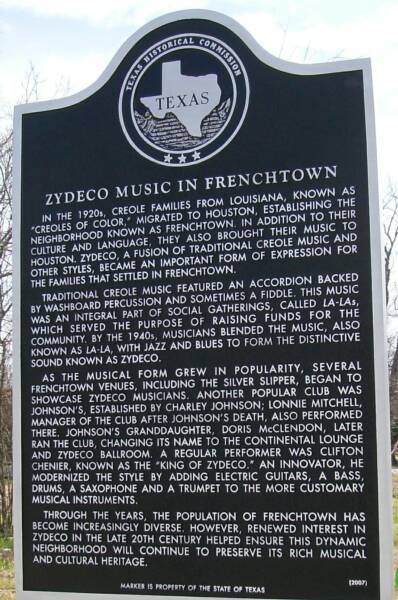
The families in "French Town" began to hold meetings at each other's homes to discuss building their own church. They decided to take turns holding fundraisers at their homes:  such as house Zydeco dances, selling gumbo, boudain and pralines to raise enough money to build a church. They had just about raised enough funds when all of the money was stolen. After this happened, they began over again to hold fundraisers to raise enough money for a church. They originally wanted to build the church in "French Town" on Delia Street, but someone generously donated the land on Sumpter Street near the railroad tracks. Once enough money was raised, the people of "French Town" donated their time and talents to build Our Mother of Mercy Catholic church with their own hands. Father Flarety, S.S.J., a Josephite priest, who was the assistant pastor at St. Nicholas, was sent to be the first pastor of Our Mother of Mercy Catholic Church.

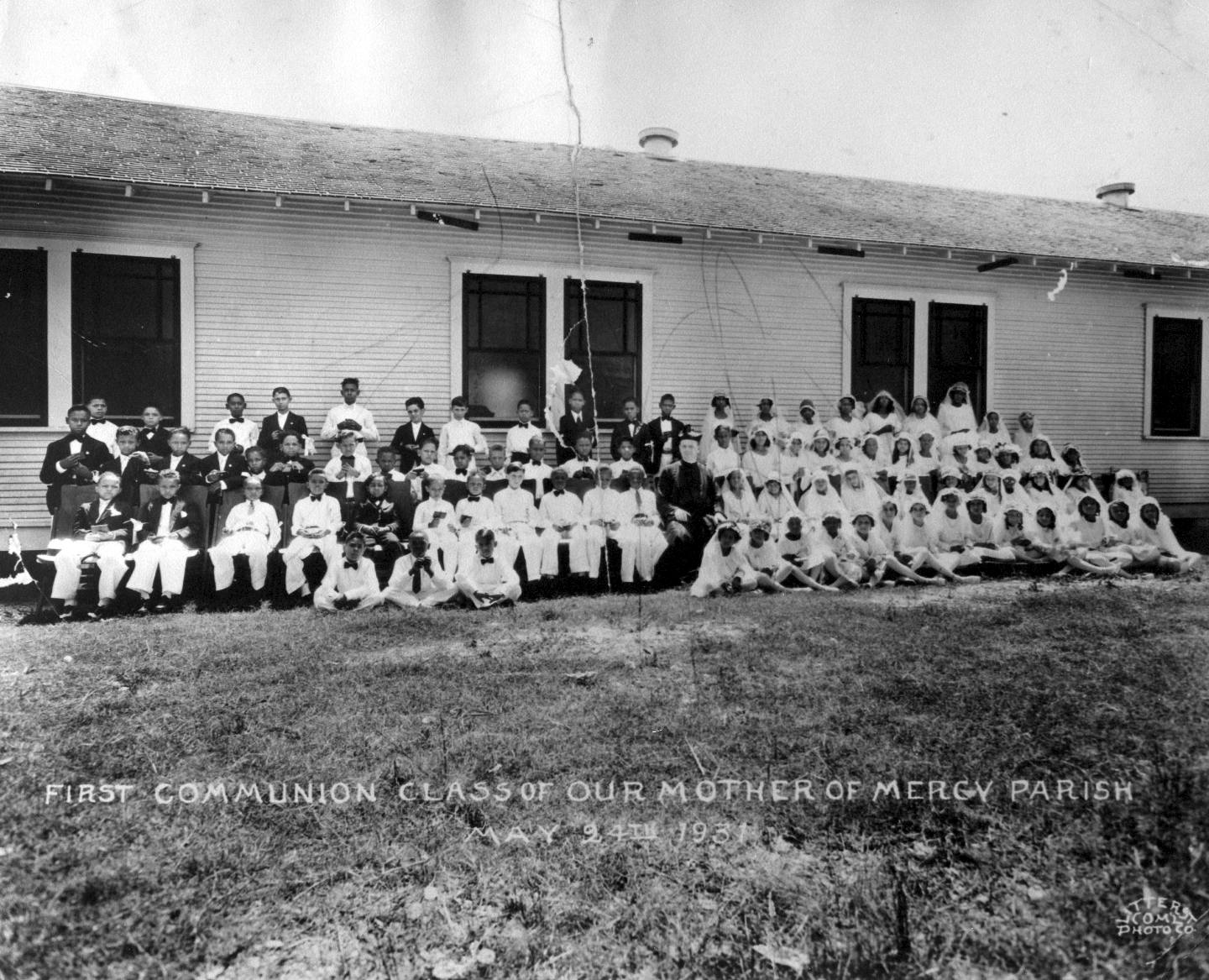
In 1930, a huge procession of people from "French Town" along with Father Flarety dedicated the second black church in Houston and the only church built by a Creole community. On Sundays and Holidays the families of "French Town" walked on dirt roads to attend church. They would stop along the way for their neighbors to join the walk to church until they swelled into a huge crowd by the time they arrived at church for Mass. Inez Prejean Calegon and Olivia Prejean Adams, children of original founders, Agnes Sonnier Prejean and Victor Prejean, were members of the very first class to celebrate their First Communion in the new church. In the early 1930's, Natalie Kerlegon Guerra and Bernadette Kerlegon donated the statue of Our Blessed Lady. This statue is still on the church grounds today.

Not long after the church was dedicated, the congregation grew so quickly that the parishioners who donated the first church, raised enough funds through Church Zydeco dances and Bazaars to add on an annex, rectory, convent and school. Enrollment at the school rapidly increased and fundraisers were again held to build an annex. Father Keil, S.S.J., was very instrumental in the building of the high school. Part of the original school still stands today on the church property. The Sisters of the Holy Family (the black nuns of New Orleans) were the primary educators at the school. The Sisters of the Holy Family have served the school over the years to this very day. The foundress of their order, Henriette Delille, is now in the process of becoming the first (US native-born) African American Saint. In earlier years, many "Mercylites" were able to obtain good jobs without a college education through the superior spiritual and mental education provided by the Josephite priests like Father Chester C. Ball, S.S.J. and Sisters of the Holy Family like Sisters Gabriella and Anna Mary, S.S.F. During the early 1940's Theresa and John Walden Carrier were one of the first couples to hold a large wedding ceremony in the original church.

As the parish community grew over the years, many of the original founders along with their children continued to participate in Church fundraisers including Zydeco dances featuring Clifton Chenier and Bazaars to thelp build a new convent, church, school and rectory. Many of the church's original founders established and participated in organizations that currently exist today such as:  The Knights of St. Peter Claver, The Ladies Auxiliary, The Saint Vincent DePaul Society, The Legion of Mary, Junior Knights and Daughters.

An entire community and their descendants have been baptized, married, educated and buried in a church that a small group of people built over 70 years ago. The streetcars no longer ride the rails and the streets are paved now. But, the love and sacrifice that so may came together over the years to build Our Mother of Mercy continues to serve the community on both a spiritual and social level. The original founders probably never imagined just how many lives and souls would be touched and saved through their dedication, suffering and sacrifice. We can never repay them and the clergy who have been so much a vital part of our worship and education over the years for all they have done and continue to do for us. What they did for this church community and it's descendants will always be lovingly cherished and never forgotten!        


Copyright 2000-2008, Denise Labrie. All Rights Reserved.
Inez Prejean Calegon and her sister, Olivia Prejean Adams (pictured on the first row number 7 and 8 from the right) were members of the first class to celebrate their First Communion in the new church (May 24, 1931).
French Descendants Leave Legacy (Labrie-Goudeau-Rideau Family Web Site click here)
To become a member of the Frenchtown Community Association please contact it's President Frank Broussard at (713)222-2664 to join in preserving it's history and continuing the efforts of community service that it's original residents began over seventy years ago.
Frenchtown Community Association (Click here)